



Air Pollution / Can You Trust AQI Apps? Faulty Readings Putting India at Risk
Key Points
- Users across India are reporting major mismatches between AQI app readings and real‑world air quality, raising concerns about data accuracy.
- Faulty sensors, poor maintenance, and data lag are among the key reasons behind misleading AQI numbers that influence daily decisions.
- The issue reflects a deeper problem — growing dependence on digital tools over personal experience, even when the data is clearly unreliable.
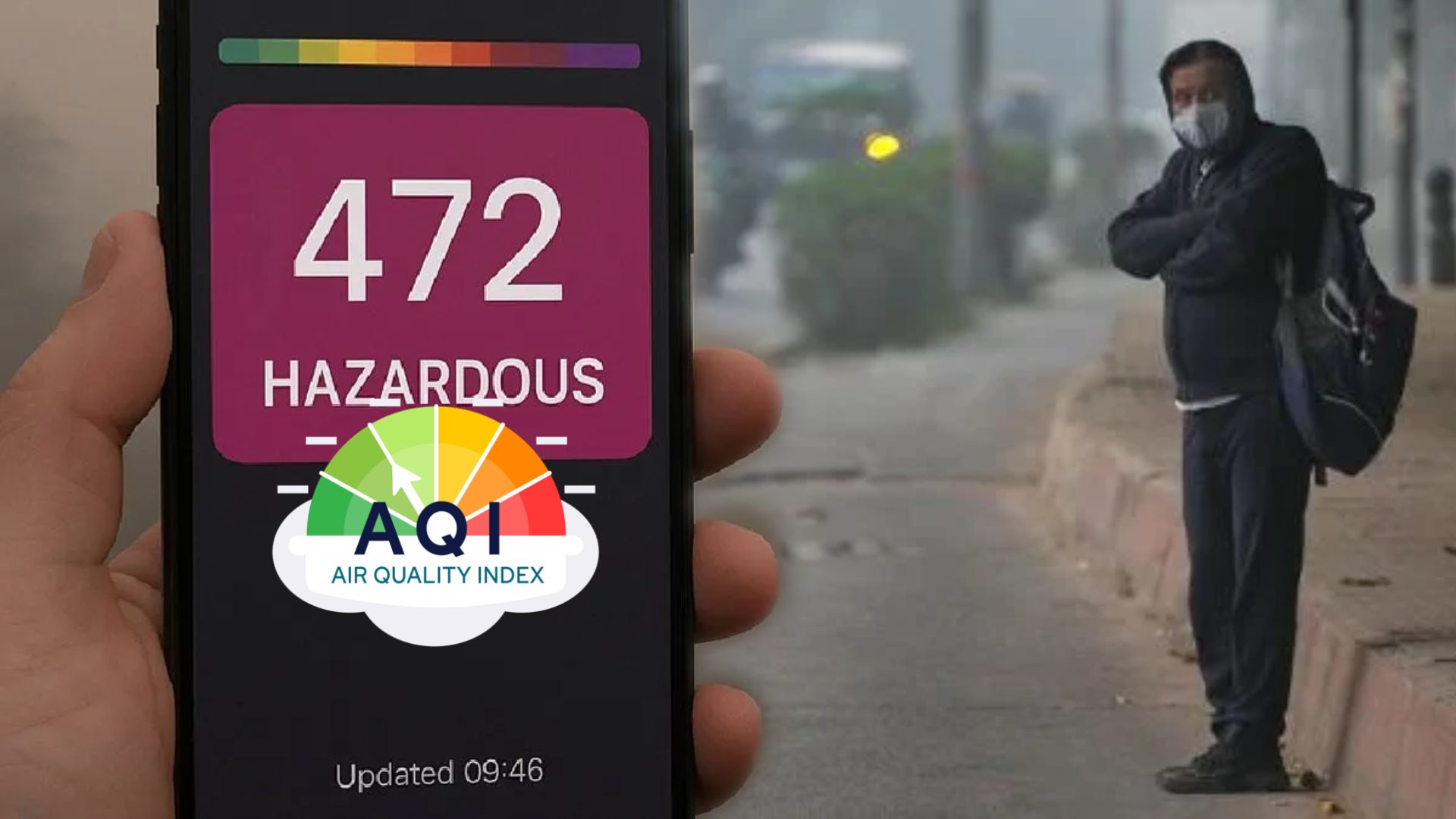
Bhubaneswar, Dec 11: In India checking the AQI (Air Quality Index) has become a routine as checking the weather. With increasing concern about pollution, millions of people rely on AQI apps to decide whether to go for a walk, send children to schools or to plan any outdoor activities. This platform presents themselves as scientific, accurate and real time — but what if the data and numbers we trust are wrong?
Across several cities in India users are noticing worrying pattern — AQI readings that do not match the reality outside. On some days the apps show hazardous levels, while the air feels completely normal. On other days the air feels thick and polluted but the numbers appear surprisingly moderate.
A person recently shared his experience on a LinkedIn post
stating: "The app said my city was
dying. My lungs disagreed. Need your opinion, your opinion matters to me."
Also read: Pay Cuts Likely for Virat Kohli and Rohit Sharma: Inside BCCI’s New Central Contract Shake‑Up
According to the person, the AQI app “screamed 2176 (Hazardous)” for Bhubaneswar at 5:58 PM. However, the reality was — “The air was clean, pleasant, and no smog as well.”
Adding more to the post, he wrote that the app showed AQI numbers “dropped to 244 (severe) by 8:34 PM”. And the reality, similar to what he “had experienced 96 minutes before.”
These kinds of things are reported on a regular basis, and it’s definitely concerning. Whether these are glitches or sensor failure, not only the app developers, but the government should also address these issues.
The man further went on to write, people, who follow these apps, might have “cancelled outdoor plans, bought air purifiers they didn't need, and experienced unnecessary anxiety,” due to the early morning AQI reading.
What he wrote is definitely a concerning issue, so does his question: Can we trust such apps, which provide data completely different from the reality? Can we trust the digital tools that control and shape our daily decisions?

📱 Get Argus News App
✨A Growing Dependence on Air Quality Apps
Over the last few years these apps have become a part of daily lives, especially in urban regions. With just one tap people can see numerical readings, colour-coded maps, and health advisories. These apps claim to simplify complex environment data into easy-to-understand numbers. But how much accurate or even close to be accurate these numbers are?
Schools use these numbers to decide whether to conduct or continue any outdoor activities. Runners use them to plan their morning and evening jog. Families check AQI before sending the elderly members outside. The trust is strong — sometimes stronger than trust in personal experiences.
But this dependency turns risky when the provided data is found to be unreliable.
So, why do the readings go wrong?
There are several reasons why AQI apps can display misleading or incorrect numbers, such as sensor malfunctioning, poor maintenance, limited sensor coverage, and data lag.
The consequences of faulty AQI data are more serious than what many realise. A single incorrect reading can cause panic among users. When public trust is broken repeatedly — people either panic more or stop trusting AQI numbers altogether.
However, the bigger issue still lies in “Trusting Technology Blindly”. The AQI problem highlights a larger digital shift — increasingly trusting screens more than our own senses.
If an app says the weather is terrible, we believe it instantly — even if it is clear outside. This habit extends to other platforms too — weather prediction, hotel booking systems, and online pricing algorithms.
When these systems and apps malfunction, they don't just
create mere inconvenience but influence people’s decisions and behaviour.
Compiled by: Aditi Majhi
Related Topics
Explore more stories
